

If you are buying or selling a diesel generator in India, the basic answer is straightforward: diesel generator sets classified under HSN heading 8502 generally attract 18% GST. For an intra-state sale, that normally means 9% CGST plus 9% SGST. For an inter-state sale, it is generally charged as 18% IGST.
The part that often causes confusion is the HSN code. A complete diesel generator set does not use one identical eight-digit code at every output. The correct subheading depends mainly on the generator’s rated output in kVA. I will walk you through the current codes, show you how to calculate GST, explain input tax credit, and point out the situations where I would verify the tax treatment with a GST professional before issuing an invoice.
Quick Answer: What Is the GST Rate on a Diesel Generator?
| Item | Typical Classification | GST Rate |
|---|---|---|
| Complete diesel generator set | HSN 8502 | 18% |
| Intra-state sale | CGST + SGST | 9% + 9% |
| Inter-state sale | IGST | 18% |
| Parts principally for generating sets | Often HSN 8503 | 18% in the general rate schedule |
I would not classify a generator only by looking at the word “diesel” on the invoice. The important question is whether you are selling a complete electric generating set, an engine by itself, an alternator, a control panel, spare parts, or an installation/service package. Those can fall under different headings.
Current Diesel Generator HSN Codes by Output
For diesel or semi-diesel generating sets, the HSN classification under heading 8502 is split by rated output. Here is the practical table I use as a starting point.
| Generator Output | HSN Code | Description |
|---|---|---|
| Not exceeding 75 kVA | 85021100 | Compression-ignition generating set up to 75 kVA |
| Above 75 kVA and up to 375 kVA | 85021200 | Compression-ignition generating set above 75 kVA but not above 375 kVA |
| Above 375 kVA and up to 1,000 kVA | 85021310 | Diesel generating set above 375 kVA but not above 1,000 kVA |
| Above 1,000 kVA and up to 1,500 kVA | 85021320 | Diesel generating set above 1,000 kVA but not above 1,500 kVA |
| Above 1,500 kVA and up to 2,000 kVA | 85021330 | Diesel generating set above 1,500 kVA but not above 2,000 kVA |
| Above 2,000 kVA and up to 5,000 kVA | 85021340 | Diesel generating set above 2,000 kVA but not above 5,000 kVA |
| Above 5,000 kVA and up to 10,000 kVA | 85021350 | Diesel generating set above 5,000 kVA but not above 10,000 kVA |
| Above 10,000 kVA | 85021360 | Diesel generating set above 10,000 kVA |
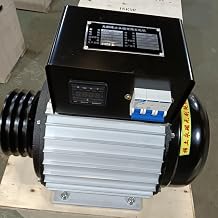
For most small business, commercial, construction, farm, telecom, and backup-power applications, the codes I see most often are 85021100 and 85021200 because many common sets are below 375 kVA.


Why the kVA Rating Matters for HSN Classification
The output bracket determines the eight-digit tariff item. That means a 62.5 kVA generator and a 125 kVA generator may both attract 18% GST, but they do not necessarily use the same eight-digit HSN code.
| Example Generator | Output Bracket | Likely HSN |
|---|---|---|
| 5 kVA portable diesel set | Up to 75 kVA | 85021100 |
| 25 kVA standby set | Up to 75 kVA | 85021100 |
| 62.5 kVA commercial set | Up to 75 kVA | 85021100 |
| 100 kVA industrial set | Above 75 to 375 kVA | 85021200 |
| 250 kVA generator | Above 75 to 375 kVA | 85021200 |
| 500 kVA generator | Above 375 to 1,000 kVA | 85021310 |
| 1,250 kVA generator | Above 1,000 to 1,500 kVA | 85021320 |
I recommend using the rated output shown on the manufacturer’s nameplate, technical data sheet, purchase order, and invoice. If the documents disagree, fix that before filing GST returns because inconsistent product descriptions can create unnecessary classification questions later.
How to Calculate GST on a Diesel Generator
The calculation itself is simple.
GST amount = Taxable value × GST rate
If the GST rate is 18%:
GST = Taxable value × 0.18
Total invoice value = Taxable value + GST
Example 1: ₹5,00,000 Generator Sold Within the Same State
| Calculation | Amount |
|---|---|
| Taxable value | ₹5,00,000 |
| CGST at 9% | ₹45,000 |
| SGST at 9% | ₹45,000 |
| Total GST | ₹90,000 |
| Total invoice | ₹5,90,000 |
Example 2: ₹5,00,000 Generator Sold to Another State
| Calculation | Amount |
|---|---|
| Taxable value | ₹5,00,000 |
| IGST at 18% | ₹90,000 |
| Total invoice | ₹5,90,000 |
The total tax is the same in these simple examples. The difference is whether it is split between CGST and SGST or charged as IGST.
GST Calculation Examples by Generator Price
| Base Price | GST at 18% | Total Price Including GST |
|---|---|---|
| ₹1,00,000 | ₹18,000 | ₹1,18,000 |
| ₹2,50,000 | ₹45,000 | ₹2,95,000 |
| ₹5,00,000 | ₹90,000 | ₹5,90,000 |
| ₹10,00,000 | ₹1,80,000 | ₹11,80,000 |
| ₹25,00,000 | ₹4,50,000 | ₹29,50,000 |
| ₹50,00,000 | ₹9,00,000 | ₹59,00,000 |
How to Calculate the Base Price When GST Is Already Included
Sometimes I see a quotation that says “₹5,90,000 including GST.” If you want to calculate the pre-GST value, do not simply subtract 18% from the final number. Instead, divide by 1.18.
Taxable value = GST-inclusive price ÷ 1.18


For ₹5,90,000:
₹5,90,000 ÷ 1.18 = ₹5,00,000
GST = ₹90,000.
| GST-Inclusive Amount | Taxable Value | GST Portion |
|---|---|---|
| ₹1,18,000 | ₹1,00,000 | ₹18,000 |
| ₹2,95,000 | ₹2,50,000 | ₹45,000 |
| ₹5,90,000 | ₹5,00,000 | ₹90,000 |
| ₹11,80,000 | ₹10,00,000 | ₹1,80,000 |
Does a Diesel Generator Always Use HSN 8502?
A complete generating set is normally classified under heading 8502, but individual components may be different.
If you sell only the diesel engine, you may be dealing with a Chapter 84 engine classification rather than 8502. If you sell only an alternator, the classification may fall elsewhere in Chapter 85. If you sell parts designed principally for a generator, heading 8503 may apply. Control panels, batteries, silencers, fuel tanks, cables, and switchgear may have their own classifications.
This is why I do not recommend copying the complete generator HSN code onto every spare-parts invoice.
GST on Diesel Generator Parts
The CBIC rate schedule lists parts suitable for use solely or principally with machines of headings 8501 or 8502 under heading 8503 at 18% in the general schedule. However, a part that has its own specific tariff heading may need to be classified under that heading instead.
| Item | Possible Treatment | What I Would Verify |
|---|---|---|
| Complete DG set | HSN 8502 | kVA-based subheading |
| Generator-specific part | May fall under 8503 | Whether a more specific heading applies |
| Diesel engine sold separately | Chapter 84 | Engine type and application |
| Battery | Separate battery heading | Battery chemistry and specification |
| Switchgear/control panel | Separate Chapter 85 heading may apply | Voltage and function |
GST on Installation and Commissioning
A generator purchase often includes more than the machine. You may also have unloading, foundation work, cabling, exhaust piping, acoustic work, control-panel installation, testing, synchronization, and commissioning.
The tax treatment can depend on how the contract is structured. A straightforward supply of goods with incidental installation may be treated differently from a broader works contract or composite supply. This is an area where I would not rely on the generator’s 8502 HSN alone without reviewing the purchase order and scope of work.
If you are a seller, make sure the quotation clearly states whether installation is included, separately charged, or supplied by a different contractor.
Can a Business Claim Input Tax Credit on a Diesel Generator?
In many ordinary business situations, a GST-registered buyer may be able to claim input tax credit on the GST charged on a diesel generator if the generator is used in the course or furtherance of taxable business activities and the normal ITC conditions are satisfied.
However, I would check the details carefully. ITC depends on the buyer’s registration status, business use, possession of a valid tax invoice, receipt of the goods, supplier compliance, payment conditions, and whether any blocked-credit provision applies.
There is also an important accounting point: if you claim depreciation under the Income-tax Act on the GST component of the capital cost, GST law can restrict ITC on that same tax component. In practice, businesses normally coordinate the capitalization and ITC treatment with their accountant.
| Situation | ITC Position to Check |
|---|---|
| Generator used for taxable business operations | ITC may generally be available if conditions are met |
| Generator partly used for exempt/non-business activities | Apportionment/reversal may be required |
| Buyer not registered under GST | No regular GST input credit mechanism |
| GST component included in depreciable cost and depreciation claimed on it | ITC issue should be reviewed carefully |
| Complex construction/works contract | Specific blocked-credit rules may need review |
What About GST on Diesel Fuel Used in the Generator?
This is a common source of confusion. The GST on the generator equipment and the tax on the fuel are separate issues.
High-speed diesel is not currently taxed under the normal GST levy in the same way as the generator itself. Diesel remains subject to the petroleum tax structure, including central and state levies. So buying a DG set at 18% GST does not mean the diesel you later pour into it also carries 18% GST.
This matters when you calculate the real operating cost of a generator. If you want to compare generator power with utility electricity, see my guide on diesel generator vs. electricity cost per kWh.
GST Example: 25 kVA Diesel Generator
Suppose I buy a 25 kVA diesel generator for ₹3,20,000 before tax.
| Item | Value |
|---|---|
| Generator rating | 25 kVA |
| HSN code | 85021100 |
| Base value | ₹3,20,000 |
| GST rate | 18% |
| GST amount | ₹57,600 |
| Total invoice | ₹3,77,600 |
GST Example: 100 kVA Diesel Generator
A 100 kVA set falls above 75 kVA but not above 375 kVA, so the classification moves to 85021200.
| Item | Value |
|---|---|
| Generator rating | 100 kVA |
| HSN code | 85021200 |
| Base value | ₹8,00,000 |
| GST at 18% | ₹1,44,000 |
| Total invoice | ₹9,44,000 |
GST Example: 500 kVA Diesel Generator
A 500 kVA generator falls into the above-375-kVA but not-above-1,000-kVA band.
| Item | Value |
|---|---|
| Generator rating | 500 kVA |
| HSN code | 85021310 |
| Base price | ₹35,00,000 |
| GST at 18% | ₹6,30,000 |
| Total invoice | ₹41,30,000 |
Does the GST Rate Change With Generator Size?
Under the current general rate schedule, the generator’s output changes the eight-digit HSN classification, but the complete generating set remains within heading 8502, which is listed at 18% GST.
So a 25 kVA set and a 500 kVA set may have different HSN subcodes while still attracting the same general 18% GST rate.
Are There Special GST Rates or Exemptions?
There can be special treatment based on end use, recipient, project type, exemption notification, or another specific legal provision. Marine supplies are one example where special concessional treatment has appeared in GST rulings and notifications under particular conditions.
For that reason, I treat 18% as the general rate for heading 8502, not a promise that every unusual transaction in every sector will always be taxed identically.
If you are supplying to a shipyard, defence project, export unit, government project, SEZ, or another transaction with special documentation, verify the applicable notification before invoicing.
What Should Appear on a Diesel Generator Tax Invoice?
A clean invoice reduces classification disputes. I would normally expect the invoice to clearly identify:
- Generator brand and model
- Rated output in kVA
- HSN code
- Taxable value
- GST rate
- CGST and SGST or IGST, as applicable
- GSTIN details where required
- Place of supply
- Serial number if used in your business process
- Separate installation or service charges when separately invoiced
Common GST Mistakes I Would Avoid
1. Using 85021100 for Every Diesel Generator
That code is only for sets not exceeding 75 kVA. A 125 kVA or 500 kVA generator belongs in a different subheading.
2. Applying 18% to the GST-Inclusive Price
If the quoted price already includes GST, extract the tax using the inclusive-price formula rather than adding another 18%.
3. Classifying Every Spare Part Under 8502
The complete generator and the parts are not necessarily classified the same way.
4. Ignoring Place of Supply
An intra-state sale generally uses CGST and SGST. An inter-state sale generally uses IGST.
5. Assuming Installation Has the Same Treatment Without Checking the Contract
Installation, civil work, electrical work, and commissioning can create composite-supply or works-contract questions depending on the facts.
6. Claiming ITC Without Checking Capitalization
Coordinate your GST credit and depreciation treatment so you do not claim conflicting tax benefits on the GST component.
Diesel Generator GST Rate vs. Operating Cost
GST affects the acquisition cost, but it does not tell you whether a diesel generator is economical to run. The bigger long-term costs are fuel, maintenance, oil, filters, repairs, load factor, and depreciation.
If you are evaluating total ownership cost, you may also find these guides useful:
- Diesel Generator Burn Rate: How Much Fuel Does a Generator Use?
- How Much Fuel Does a Diesel Generator Use?
- Diesel Generator Cost per kWh: How to Calculate Your True Power Cost
- Diesel Generator vs. Electricity Cost: Which Is Cheaper per kWh?
- How Often Should Diesel Generators Be Serviced?
Frequently Asked Questions
What is the GST rate on a diesel generator in India?
The current general GST rate for electric generating sets under HSN heading 8502 is 18%.
What is the HSN code for a diesel generator?
The four-digit heading is 8502. The exact eight-digit subcode depends on rated output. For example, a diesel generator not exceeding 75 kVA is 85021100, while one above 75 kVA and up to 375 kVA is 85021200.
What is the HSN code for a 25 kVA diesel generator?
A 25 kVA diesel generating set falls in the not-exceeding-75-kVA category, so the applicable classification is generally 85021100.
What is the HSN code for a 125 kVA diesel generator?
A 125 kVA set is above 75 kVA but not above 375 kVA, so it generally falls under 85021200.
What is the HSN code for a 500 kVA diesel generator?
A 500 kVA set generally falls under 85021310 because its output exceeds 375 kVA but does not exceed 1,000 kVA.
Is GST 18% on both new and used diesel generators?
The tax treatment of a normal taxable sale is based on classification and the nature of the supply, not simply whether the equipment is new or used. However, special schemes or margin-related rules can affect certain second-hand-goods transactions, so I would review the seller’s exact situation.
Can I claim GST input credit on a diesel generator?
A registered business may often claim ITC when the generator is used for taxable business activities and the normal GST conditions are met, but the facts matter. Capitalization, exempt use, works-contract issues, and blocked-credit rules should be reviewed with your accountant or GST adviser.
Is diesel fuel charged at 18% GST?
No. High-speed diesel is currently outside the regular GST levy and remains subject to the petroleum tax structure rather than the standard 18% generator-equipment rate.
Final Answer
For a normal sale of a complete diesel generator set in India, I would start with HSN heading 8502 and an 18% GST rate. The eight-digit HSN code then depends on the generator’s kVA output: 85021100 up to 75 kVA, 85021200 above 75 kVA through 375 kVA, and the 850213 series for larger sets.
For an intra-state transaction, the 18% is normally split into 9% CGST and 9% SGST. For an inter-state transaction, it is generally 18% IGST. The arithmetic is easy; the bigger risks are using the wrong HSN subcode, misclassifying components, overlooking special end-use concessions, or assuming installation and works-contract elements automatically receive the same treatment.
Tax rules and notifications can change, so before filing a return or issuing a high-value invoice, I recommend confirming the classification and any special exemption with the current CBIC/GST notification and a qualified GST professional.