
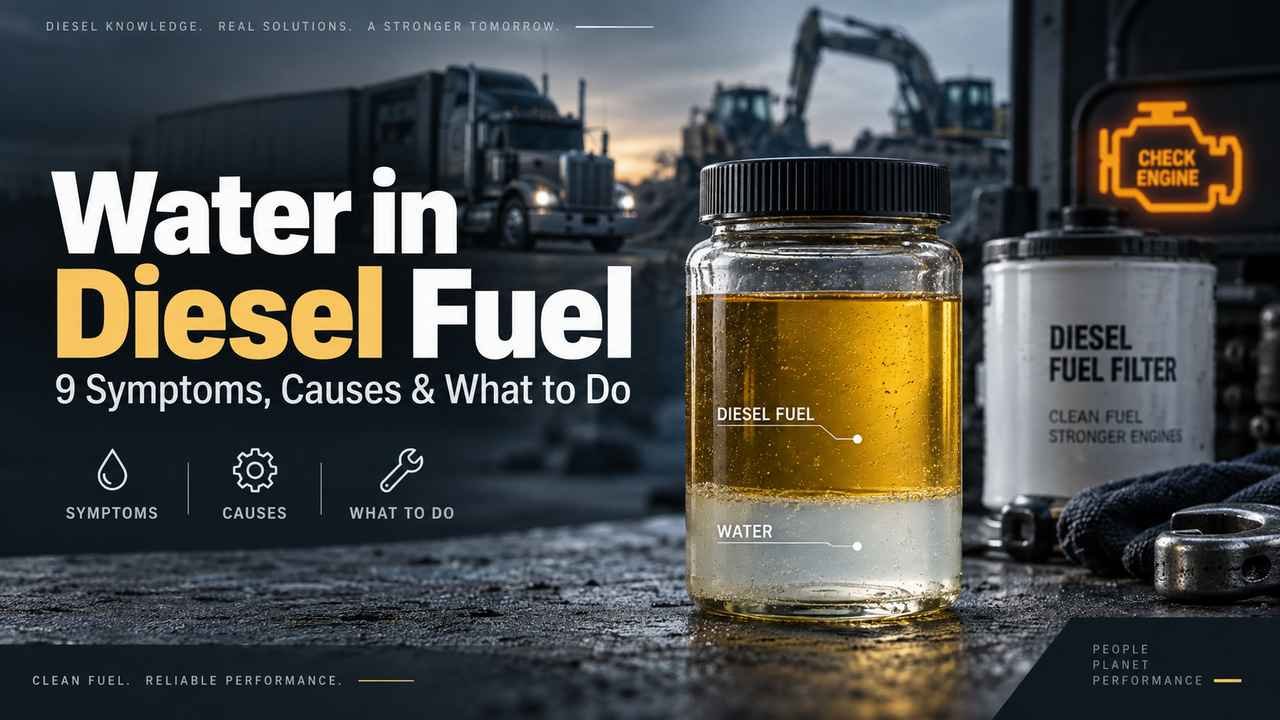
Water in diesel fuel is a problem you do not want to ignore. A small amount of water may first show up as rough running, hard starting, or a water-in-fuel warning. Larger amounts can restrict fuel flow, promote corrosion, and reduce the lubrication available to sensitive fuel-system components.
The good news is that water contamination can often be identified before it turns into an expensive repair. This guide explains the most common symptoms of water in diesel fuel, how water gets into the tank, what you should do when you suspect contamination, and when it is better to stop driving and have the fuel system inspected.
9 Symptoms of Water in Diesel Fuel
1. Hard Starting or Failure to Start
One of the first signs of significant water contamination can be difficulty starting the engine. Water does not provide the same combustion and lubrication characteristics as diesel fuel. If enough contaminated fuel reaches the injection system, the engine may crank longer than normal or fail to start.


2. Rough or Uneven Engine Operation
If water reaches the injectors, the engine may run unevenly. You may notice shaking at idle, hesitation under load, or a change in the normal sound of the engine. Do not assume that water is the cause, however; injector problems, air in the fuel system, fuel filters, and other faults can produce similar symptoms.
3. Loss of Power
Water contamination can contribute to poor combustion and fuel-delivery problems. The result may be noticeably less power when accelerating, climbing a hill, towing, or operating heavy equipment.
4. Engine Stalling
An engine that starts normally but repeatedly stalls can have a fuel-supply problem. If water accumulates in the fuel system, the engine may receive contaminated fuel instead of a consistent supply of diesel.
5. Poor Acceleration or Hesitation
Hesitation when you press the accelerator can be another warning sign. The symptom is not unique to water contamination, but it becomes more suspicious when it appears together with a water-in-fuel warning, a recently replaced fuel filter, or evidence of contaminated fuel.
6. A Water-in-Fuel Warning Light
Many diesel vehicles and pieces of equipment use a water-in-fuel sensor in or around the fuel filter or water separator. When the sensor detects accumulated water, the vehicle may illuminate a warning light.
If your vehicle displays a water-in-fuel warning, check the owner's manual for the correct drain procedure. For example, Ford's diesel guidance warns operators to stop safely and drain the diesel fuel conditioner module, and not to drain the separator while the engine is running.
7. A Cloudy or Unusual Fuel Appearance
Take a fuel sample only if your vehicle or equipment manufacturer provides a safe way to do so. Clean diesel normally has a relatively clear appearance. Water contamination may produce a cloudy or hazy appearance, while free water can form a separate layer beneath the fuel because water is denser than diesel.
8. Frequent Fuel Filter Problems
Water and contamination can collect in fuel filters and water separators. If a filter becomes restricted or repeatedly needs attention, the problem may be upstream in the tank or fuel supply rather than the filter itself.
9. Rust, Sludge, or Microbial Contamination
Water sitting in a diesel tank creates conditions that can contribute to corrosion and microbial growth. Microbial contamination can produce sludge and other byproducts that clog filters and contribute to fuel-system problems.
What Causes Water to Get Into Diesel Fuel?
Water can enter a diesel tank in several ways. Common causes include:
- Condensation: Temperature changes can allow moisture to accumulate inside a partially filled tank.
- Contaminated fuel: Water may already be present in a storage tank, transfer tank, or fueling system.
- Rain or water intrusion: Damaged caps, vents, seals, or storage systems can allow water to enter.
- Flooding: Floodwater can contaminate fuel tanks and storage systems.
- Poor storage practices: Tanks that are not protected from moisture are more likely to develop contamination problems.
Does Water Separate From Diesel Fuel?
Yes. Free water is denser than diesel, so it generally settles toward the bottom of a tank when enough water is present to form a separate phase. This is why water separators and tank-bottom sampling can be useful for detecting contamination.
However, not all water contamination will appear as a clearly visible layer. Small amounts of water can be dispersed through fuel, and fuel appearance alone should not be treated as a complete diagnostic test.


DieselFuelHQ also explains this in more detail in Will Water Separate From Diesel and Settle at the Bottom of the Tank?.
What Should You Do If You Suspect Water in Diesel Fuel?
1. Do Not Keep Driving Just to See If It Goes Away
If you have a clear water-in-fuel warning, significant loss of power, repeated stalling, or strong evidence of contamination, continuing to operate the engine can make the situation worse. Follow the vehicle or equipment manufacturer's instructions.
2. Drain the Water Separator
If your diesel engine has a serviceable water separator or fuel filter with a water drain, use the procedure specified in the owner's or service manual. Cummins, for example, recommends draining the fuel-water separator with the engine off when water is detected.
3. Replace a Contaminated Fuel Filter
If the filter has collected a significant amount of water or debris, replacement may be necessary. Do not assume that draining the separator alone has removed all contaminated fuel.
4. Check the Fuel Tank
If water continues to appear after the separator is drained, the tank itself may be contaminated. A heavily contaminated tank may require professional draining, cleaning, and inspection.
5. Find the Source of the Water
Removing the water is only part of the solution. Check the fuel cap, tank, storage conditions, transfer equipment, and fueling source to determine how the contamination occurred.
Can a Diesel Fuel Additive Remove Water?
Some diesel fuel treatments are marketed for managing water or helping separate water from fuel. However, an additive should not be treated as a substitute for physically removing a significant amount of free water from a contaminated tank.
If you are dealing with a small amount of contamination, use only a product that is specifically compatible with your fuel and engine, and follow the product's dosage instructions. Your engine manufacturer's recommendations should take priority.
For more information, see our guide to the best additives for removing water from diesel.
Can Water Damage Diesel Injectors and Fuel Pumps?
It can. Water does not provide the same lubricating properties as diesel fuel, and water contamination can contribute to corrosion and wear in fuel-system components. Modern high-pressure diesel systems operate with very tight tolerances, which is one reason manufacturers use fuel filters and water separators.
Cummins documentation, for example, describes water-in-fuel sensing and separation as part of the fuel-filter system and warns about the consequences of high-pressure fuel-system exposure to unsafe conditions.
If a diesel engine has been operated with substantial water contamination and now has severe knocking, repeated stalling, no-start symptoms, or metal contamination in the filter, professional diagnosis is advisable.
How to Prevent Water in Diesel Fuel
- Keep the fuel tank cap and seals in good condition.
- Avoid leaving storage tanks exposed to unnecessary rain and moisture.
- Keep tanks reasonably full when the manufacturer or storage procedure recommends it to reduce condensation space.
- Drain water separators according to the manufacturer's maintenance schedule.
- Replace fuel filters at the recommended interval.
- Buy fuel from reputable, well-maintained fueling stations.
- Inspect storage tanks for corrosion, leaks, and water accumulation.
- Do not ignore repeated water-in-fuel warnings.
When Should You Stop Driving?
Stop operating the vehicle or equipment as soon as it is safe to do so if you receive a persistent water-in-fuel warning, the engine begins stalling, or you suspect a substantial amount of water has entered the fuel system.
Do not open or service a pressurized high-pressure diesel fuel system yourself. High-pressure fuel can cause serious injury. Follow the manufacturer's service procedure or have a qualified technician inspect the system.
Frequently Asked Questions
What does water in diesel fuel look like?
Free water can appear as a separate layer beneath diesel because it is denser. Water-contaminated fuel can also look cloudy or hazy, but visual inspection alone is not always enough to identify contamination.
Will water in diesel fuel make the engine smoke?
It can contribute to poor combustion and abnormal engine operation, but smoke has many possible causes. Do not diagnose water contamination based on smoke alone.
Can you drive a diesel with a little water in the fuel?
It is better not to knowingly operate an engine with water contamination. Drain the water separator and follow the manufacturer's procedure. If contamination is significant or symptoms continue, have the fuel system inspected.
Does diesel fuel absorb water?
Diesel can contain dissolved moisture, while excess water can also exist as dispersed or free water. Temperature changes and tank conditions can contribute to water accumulation and separation.
Is water in diesel fuel an emergency?
A small amount detected and removed promptly may not cause lasting damage. A significant amount, persistent warning, engine stalling, or evidence that water has reached the high-pressure fuel system deserves prompt attention.
Bottom Line
The most useful clues are not any single symptom but the combination of symptoms and evidence: hard starting, rough running, loss of power, stalling, a water-in-fuel warning, unusual fuel appearance, or water collected in the separator.
If you suspect contamination, deal with the water at the fuel-filter or tank level rather than simply masking the symptoms with an additive. Removing the source of contamination early can help protect the fuel system and prevent a relatively simple fuel-quality problem from becoming a major repair.
Sources and further reading: U.S. EPA Diesel Fuel Standards, Cummins fuel-system guidance, and your vehicle or equipment manufacturer's owner's manual.
Pingback: Common Problems With Diesel Generators and How to Prevent Them -
Pingback: Diesel Generator Maintenance: What You Need to Know -
Pingback: Best Practices for Storing a Diesel Generator -
Pingback: Winter Maintenance for Diesel Generators -
Pingback: Diesel Generator Bogs Down Under Load: Causes, Diagnosis, and Fixes -
Pingback: Diesel Generator Lifespan: How Long Will It Last? -
Pingback: Diesel Generator Smoking: What Black, White, and Blue Smoke Mean -